ServicesWhole Home Water Filtration
Whole Home Water Filtration in Shelbyville
We install filtration where water enters your home, so every faucet, shower and appliance gets cleaner water. You get a straight answer on what your water needs, a neat install with floors covered, and a work area left as clean as we found it.
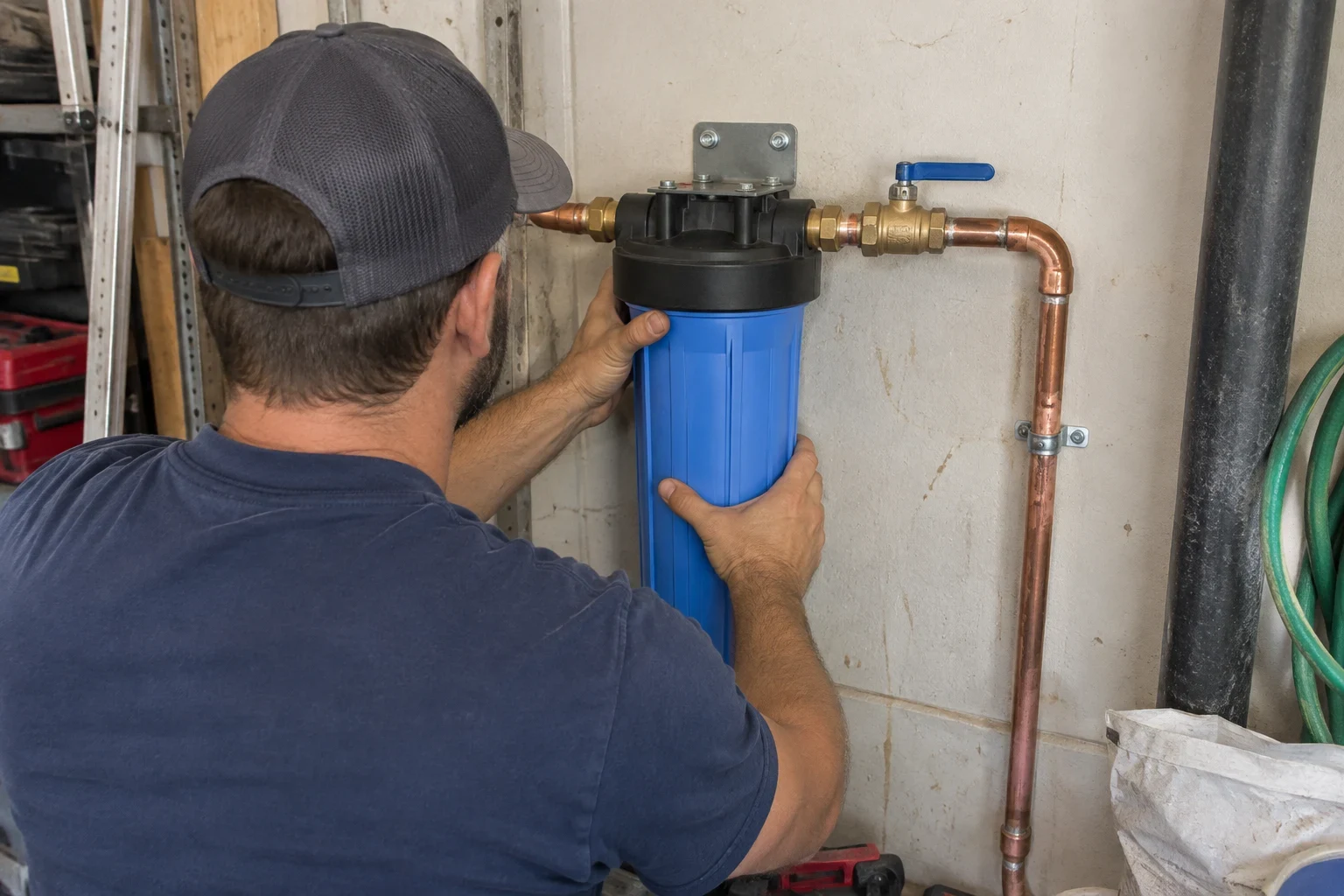
Cleaner water at every tap, not just the kitchen sink
A pitcher filter or an under-sink unit treats one glass at a time. A whole home system sits on the main water line and treats everything that comes into your home: the shower, the washing machine, the water heater and the ice maker. That means less chlorine smell in the bathroom, less scale on fixtures and longer life for the appliances that use water every day.
Much of Middle Tennessee sits on limestone, so hard water and white crust on faucets are common, and homes on private wells can add iron, sediment or sulfur odor to the list. We start by finding out what is actually in your water, then recommend only the equipment that addresses it.
Installing a system means cutting into your main line, often in a garage, crawl space or utility closet. We treat that space like part of your living area. Drop cloths go down before tools come out, and we clean up before we leave.
What our filtration installs include
Water testing first
We check hardness, chlorine and visible sediment, and for well water we look at iron and odor. You see the results before we suggest anything.
A system sized to your household
We match the filter's flow rate to the number of bathrooms and people in your home, so pressure stays strong when the shower and dishwasher run together.
Sediment, carbon and softening options
Some homes need a simple sediment and carbon setup to handle chlorine taste. Others benefit from adding a softener for scale. We explain the difference and let you choose.
Bypass valve and shutoffs
Every install gets a bypass so water keeps flowing during filter changes or service, plus shutoffs that are easy to reach.
Protected work area
Floor coverings, shoe covers indoors and a catch pan under every cut in the line. Old pipe pieces and packaging leave with us.
A walk-through when we finish
We show you how to read the gauges, when to change cartridges and how to switch to bypass, then leave the instructions where you can find them.
Signs your home could use whole home filtration
White crust on faucets and showerheads
That chalky buildup is mineral scale. The same scale forms inside your water heater and on dishwasher parts, where you cannot see it.
Chlorine smell in the shower
Treated city water is safe, but the smell can be strong in hot steam. A carbon stage removes most of it.
Orange or brown stains
Rust-colored rings in tubs and toilets usually point to iron, common with well water. It also stains laundry over time.
Spotty dishes and stiff laundry
Hard water fights soap. If glasses come out cloudy and towels feel rough, minerals are the likely cause.
Grit in aerators
Sand or sediment collecting in faucet screens means particles are traveling through every line in your home.
How install day goes
- 1
A phone call and free estimate
Tell us what you are noticing about your water. We set a time to test it, look at where your main line enters and give you a free estimate before any work is scheduled.
- 2
Setting up and protecting your space
We lay down drop cloths, cover nearby belongings and set out a catch pan. If the system goes outside, we plan for an insulated enclosure so winter cold does not reach it.
- 3
Shutting off and installing
We turn off the water, cut into the main line and fit the system with its bypass and shutoffs. Most installs take part of a day, and we tell you how long you will be without water before we begin.
- 4
Flushing, testing and cleanup
We flush the new filters, check every connection under pressure and test the water again. Then we wipe down, vacuum, haul away debris and walk you through your new system.
What affects the cost of a filtration system
Whole home filtration has no single price, because every water supply is a little different. Your free estimate breaks out the equipment and the labor on separate lines, so you know exactly where your money is going. If spreading out the cost would help, financing options are available, and you can pay with any major credit card or with cash.
- What is in your water
- Treated city water with a chlorine taste usually needs a simpler setup. Hard well water carrying iron and a sulfur smell may call for several stages working together.
- Household size and flow
- More bathrooms and more people using water at once mean a larger system, so your pressure stays steady.
- Installation location
- An open garage wall is the easiest spot to work. A cramped crawl space, or an outdoor location that needs an insulated enclosure, takes more time and more material.
- Condition of the main line
- If the pipe where we tie in is corroded or an older material, a short section may need replacing to make a solid connection. We show you what we find before any of that work happens.
Questions about whole home water filtration
Something not covered here? (931) 536-9757
Will a whole house filter lower my water pressure?
A correctly sized system should not cause a noticeable drop. Pressure loss usually comes from undersized equipment or clogged cartridges. We size for your home's peak demand and show you the gauge that tells you when a change is due.
Do I need a water softener or a filter?
They do different jobs. A filter removes things like chlorine, sediment and odors, while a softener removes the minerals that cause scale. After testing, we tell you honestly whether you need one, the other or both.
How often do the filters need changing?
It depends on your water and how much you use. Sediment cartridges in many homes are changed every few months, and carbon media lasts longer. We give you a schedule based on your test results.
Does this work for well water?
Yes. Wells often need different treatment than city water, especially for iron, sediment or a rotten-egg smell. Testing tells us which stages make sense.
Will you make a mess in my garage or crawl space?
No. We cover the floor, catch any water from the line in a pan and take all old pipe and packaging with us. You should find the area cleaner than when we arrived.
Find out what your water needs
Tell us what you are seeing at the tap and we will set up testing and a free estimate. If something goes wrong with your plumbing after hours, we answer around the clock.